Features
-
Pitcher-Shaped Traps: The plant produces distinctive hanging pitchers that trap insects using slippery walls and digestive fluids.
-
Vibrant Colors: Pitchers often display stunning shades of green, red, purple, and speckled patterns.
-
Natural Insect Control: By trapping flies, ants, and other insects, the plant naturally helps control pests.
-
Climbing Growth Habit: It grows as a vine, producing larger pitchers as it matures.
-
Tropical Adaptability: Thrives in warm, humid environments with bright indirect light.
Uses
-
Ornamental Decoration: Adds an exotic and eye-catching element to homes, greenhouses, and botanical collections.
-
Educational Value: Ideal for studying plant adaptation and carnivorous mechanisms.
-
Natural Pest Control: Helps reduce small insects in indoor or greenhouse environments.
-
Collector’s Plant: Highly valued among carnivorous plant enthusiasts.
What Makes It Stand Out
-
Unique Feeding Mechanism: Unlike ordinary plants, Nepenthes rafflesiana supplements nutrients by digesting insects.
-
Striking Visual Appeal: Its colorful pitchers resemble natural works of art.
-
Conversation Starter: The plant’s unusual lifestyle makes it a fascinating centerpiece in any plant collection.
-
Rare Exotic Appeal: Not commonly found in typical gardens, giving it a special and premium feel.
About Nepenthes plants
Nepenthes, commonly known as tropical pitcher plants or monkey cups, are a fascinating genus of carnivorous plants. Native to tropical regions such as Southeast Asia and Madagascar, these unique plants have evolved specialized leaves that form pitcher-shaped structures. These pitchers are filled with digestive enzymes and attract insects, luring them in with nectar and vibrant colors. Once trapped inside, the insects are unable to escape and are eventually digested, providing the plant with essential nutrients. Nepenthes come in various shapes, sizes, and colors, with some species producing large pitchers that can reach impressive lengths. They are highly adaptable and can thrive in both indoor and outdoor environments with the right care, making them intriguing additions to any plant collection.
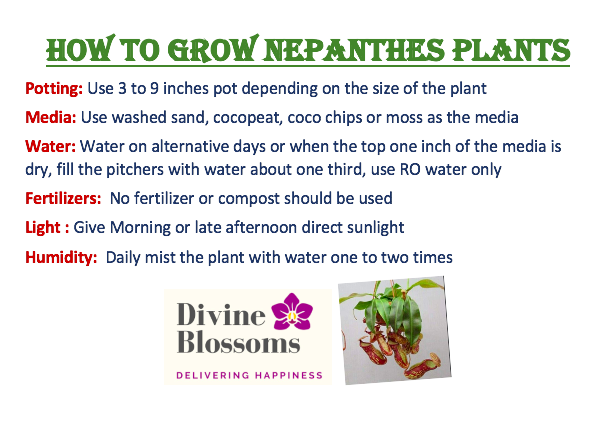
How to grow Nepenthes plants